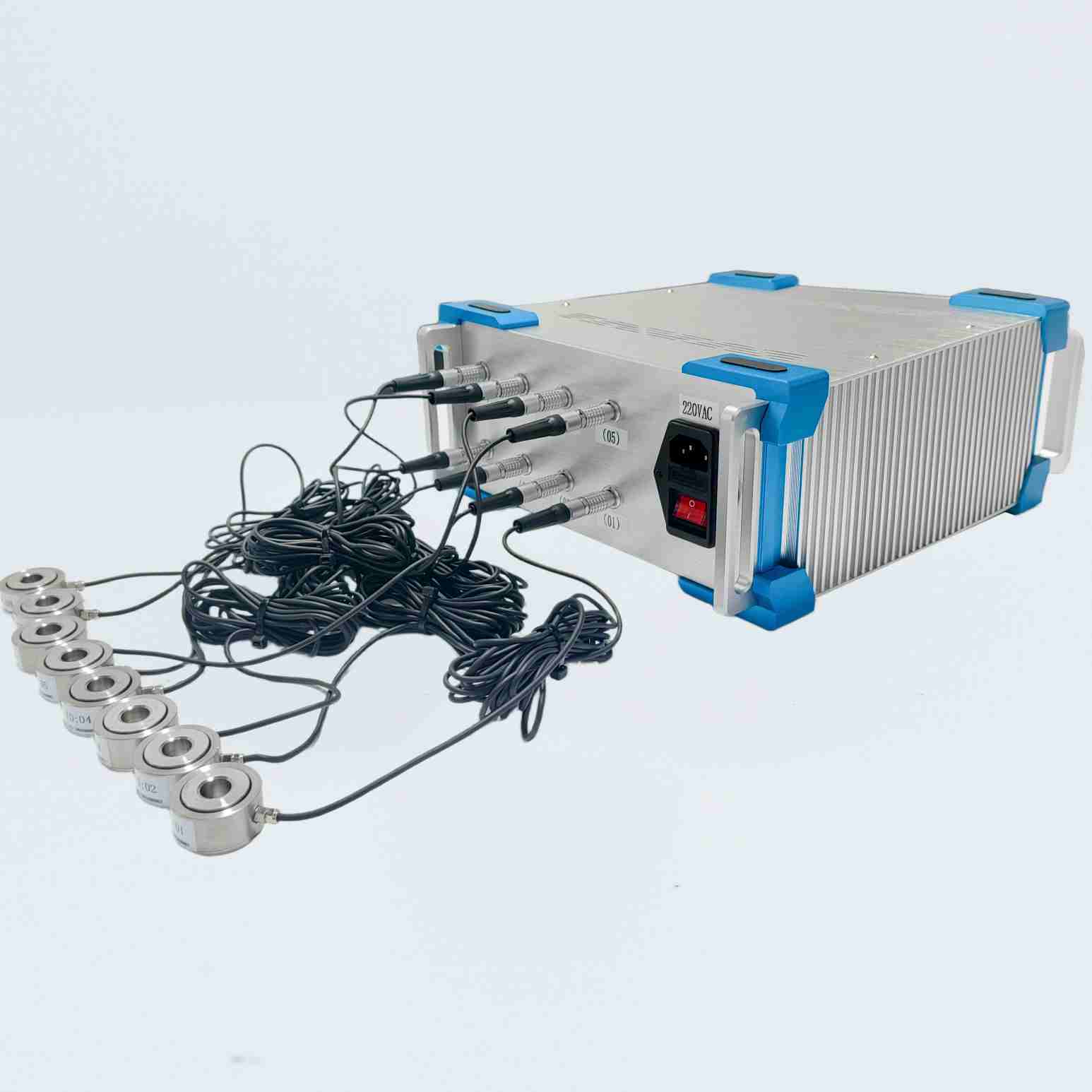
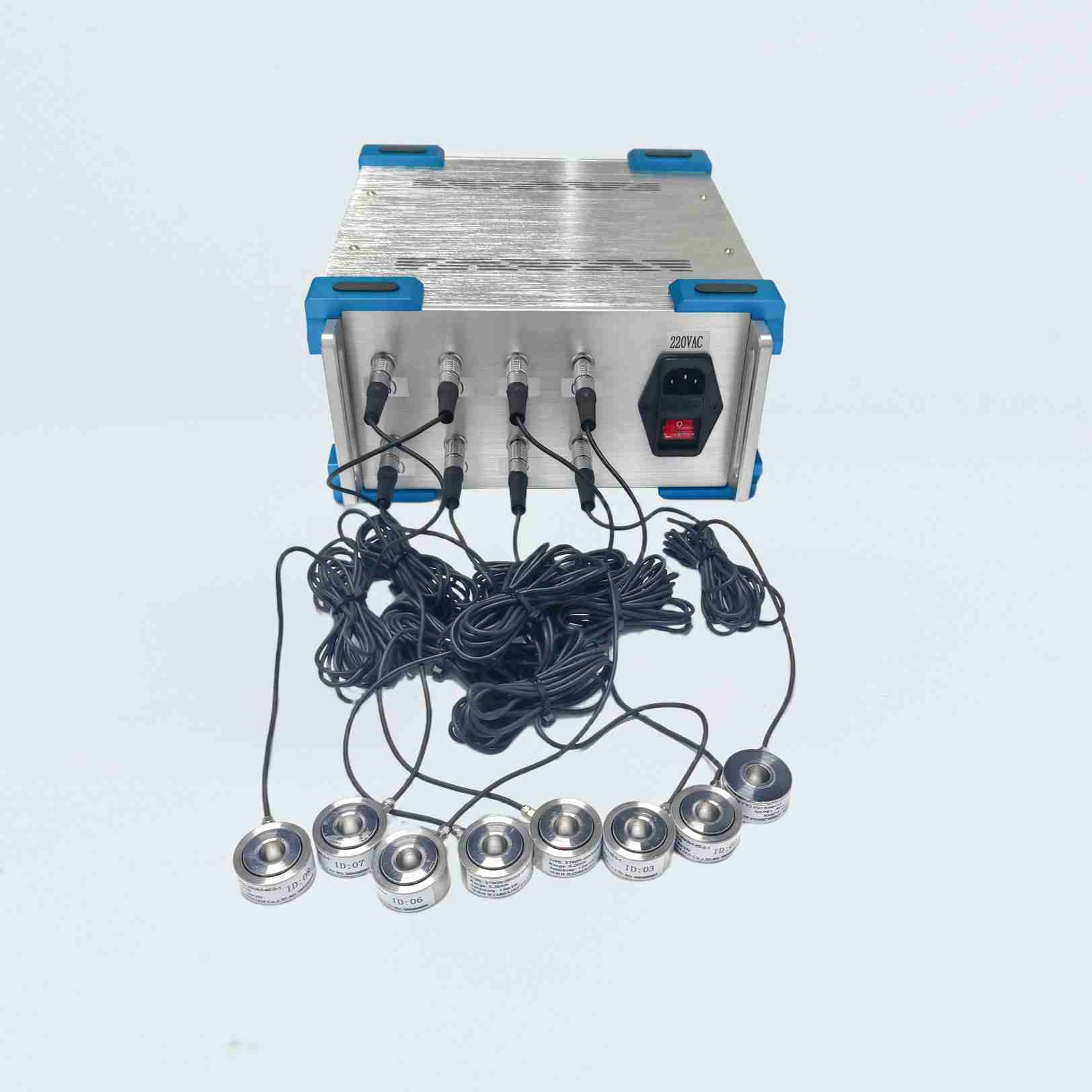
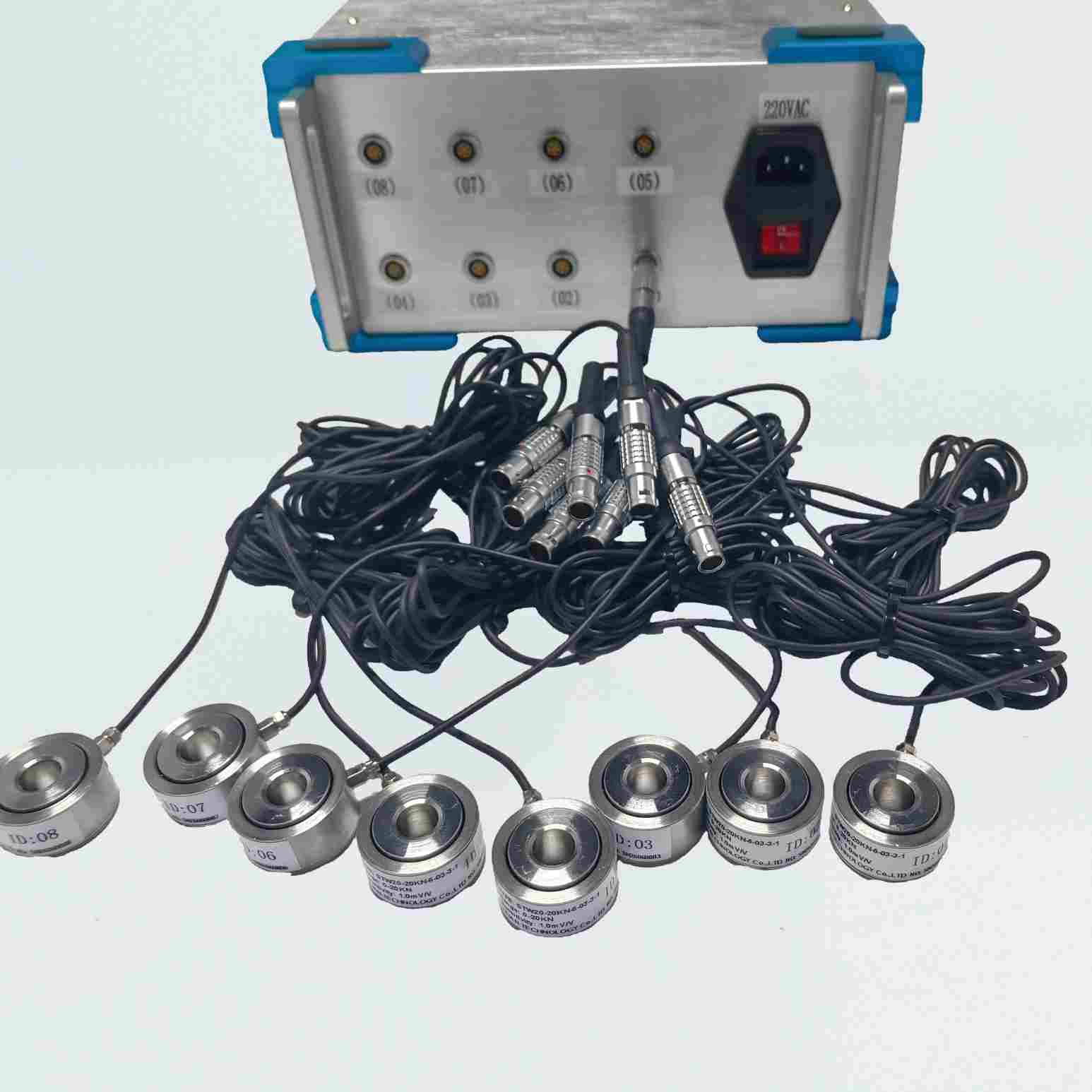
FD8121W 8-Channel Force Data Acquisition System
8 Independent, Hardware-Synchronized Channels · 2 ms Response Time · 0.05% F.S. Accuracy
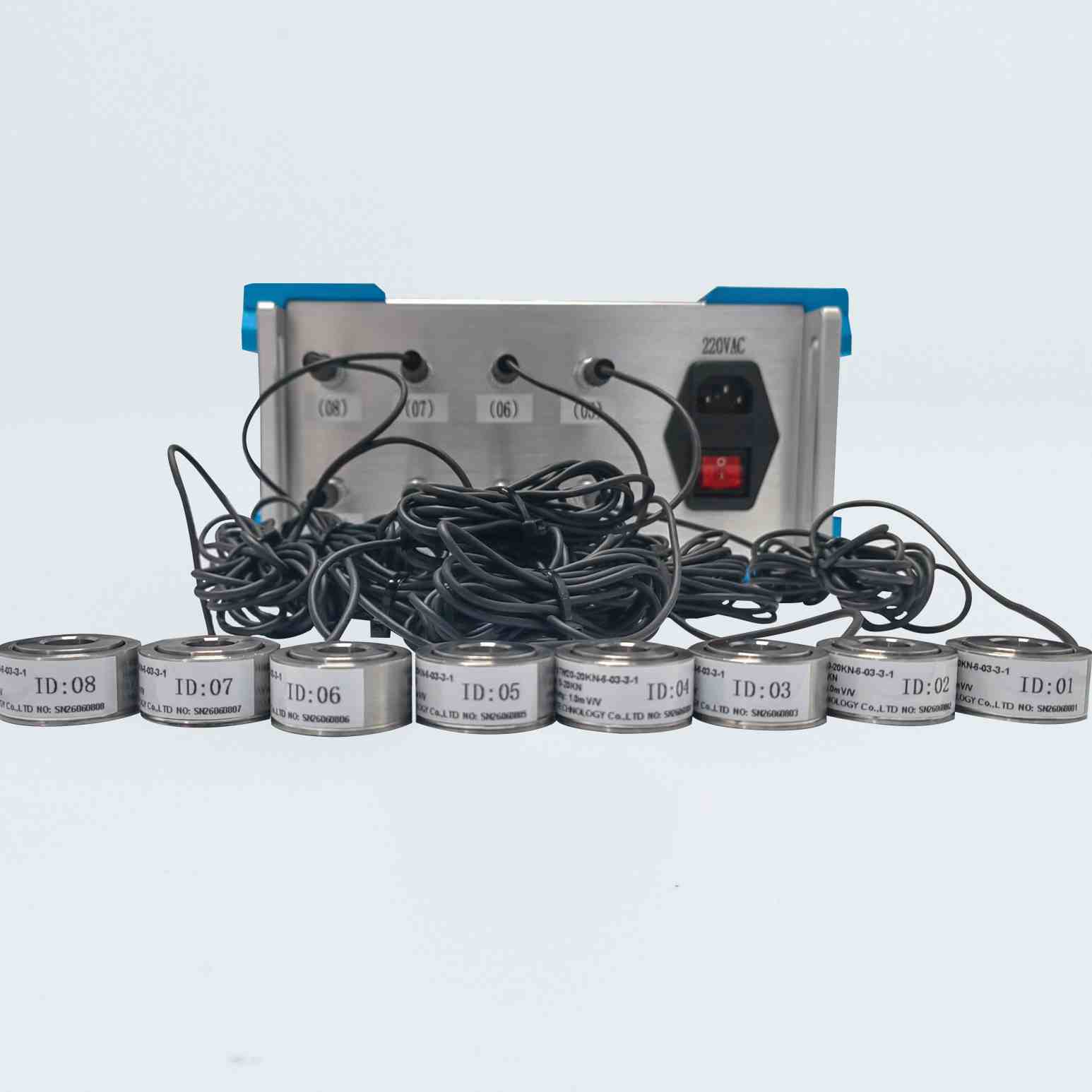
Compatible with all standard mechanical force sensor types, with included visualization software
A high-performance force data acquisition platform engineered for
demanding test environments
1. Design Objectives
Multi-point force testing on complex assemblies places three demands on an acquisition system: enough synchronized channels to avoid stitching together multiple units, a response time fast enough to resolve transient events, and sensor compatibility broad enough to avoid custom signal-conditioning hardware. The FD8121W was developed to meet all three requirements in a single instrument.
Channel count
Many acquisition units on the market are limited to one to four channels. Synchronized multi-point testing on larger or more complex structures then requires linking several units together, adding wiring complexity and integration overhead.
Response time and accuracy
Entry-level acquisition hardware typically responds in 20–100 ms. For transient events — battery charge/discharge stress spikes, stamping impacts, or short-duration overloads — this response window can miss samples or distort the recorded waveform.
Total cost of ownership
High-end imported acquisition systems can carry a significant price premium and longer lead times, along with support response times that stretch to several weeks.
YATAN Sensor spent two years in development on the FD8121W to address these three requirements, targeting performance comparable to established international instruments at a more accessible price point.
2. Technical Overview
Key Specifications
| Channel count | 8 independent channels, no cross-talk |
|---|---|
| Response time | 2 ms per channel (minimum) |
| Measurement accuracy | Up to 0.05% F.S. |
| Channel synchronization | Hardware-triggered, inter-channel timing error < 1 μs |
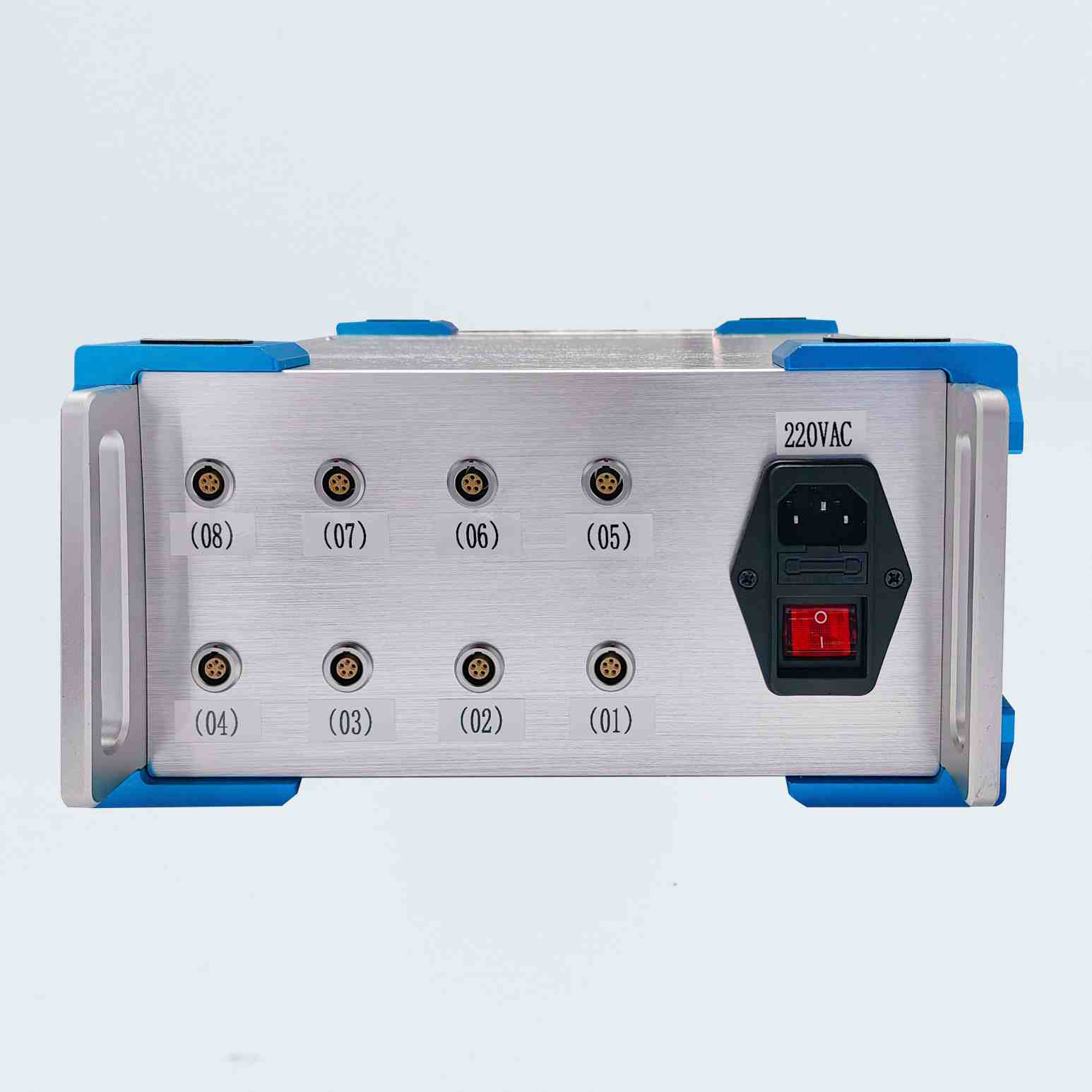
| Compatible sensor types | Load cells, tension/compression, S-type, column-type, and others |
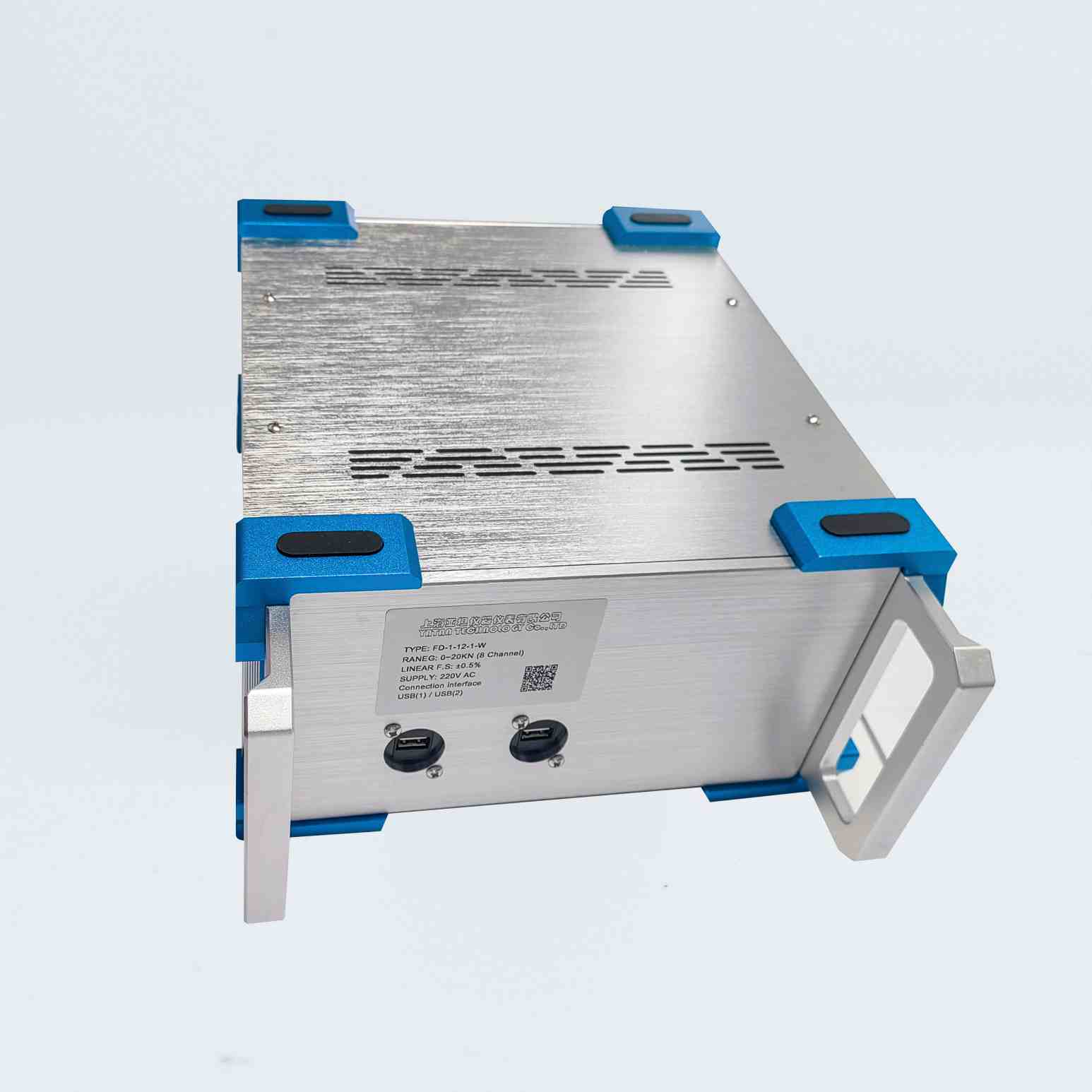
| Communication interfaces | USB, Ethernet, Bluetooth |
| Data export formats | Excel, CSV, real-time curve playback |
Core Capabilities
Broad sensor compatibility
Native support for standard mechanical force sensor types without additional
signal-conversion hardware, simplifying system integration.
Fast, high-fidelity acquisition
A 2 ms response time combined with built-in anti-aliasing filtering is designed to capture
transient force events with minimal waveform distortion.
Integrated visualization and export
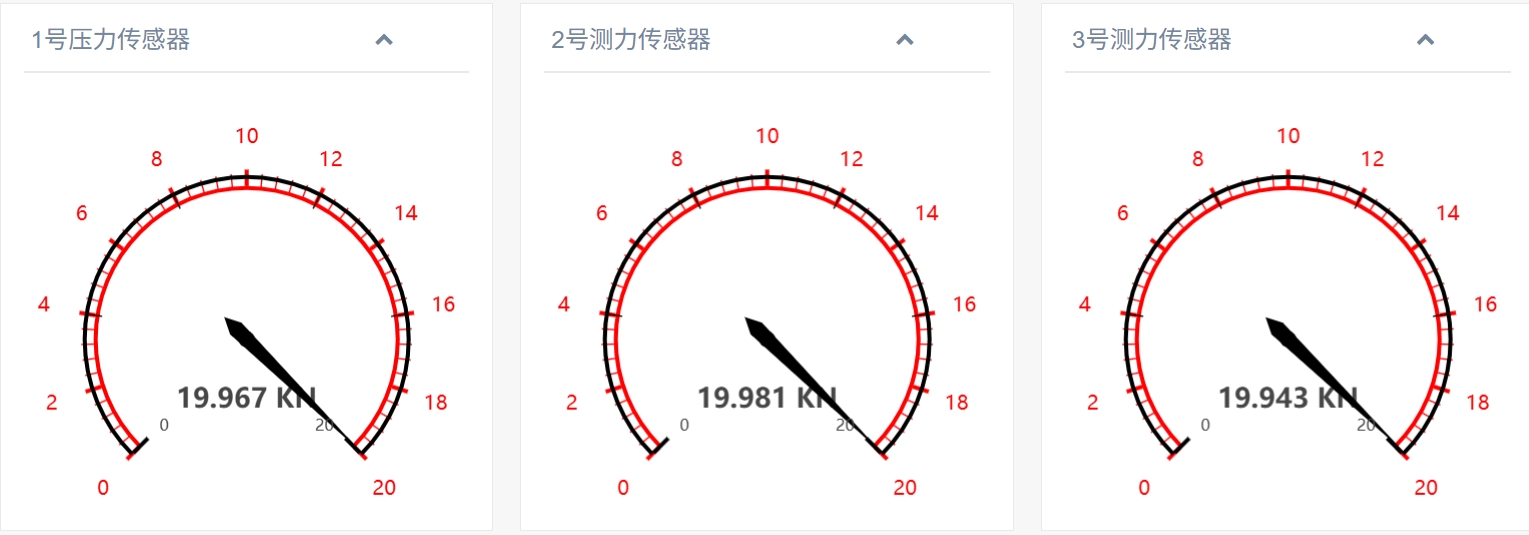
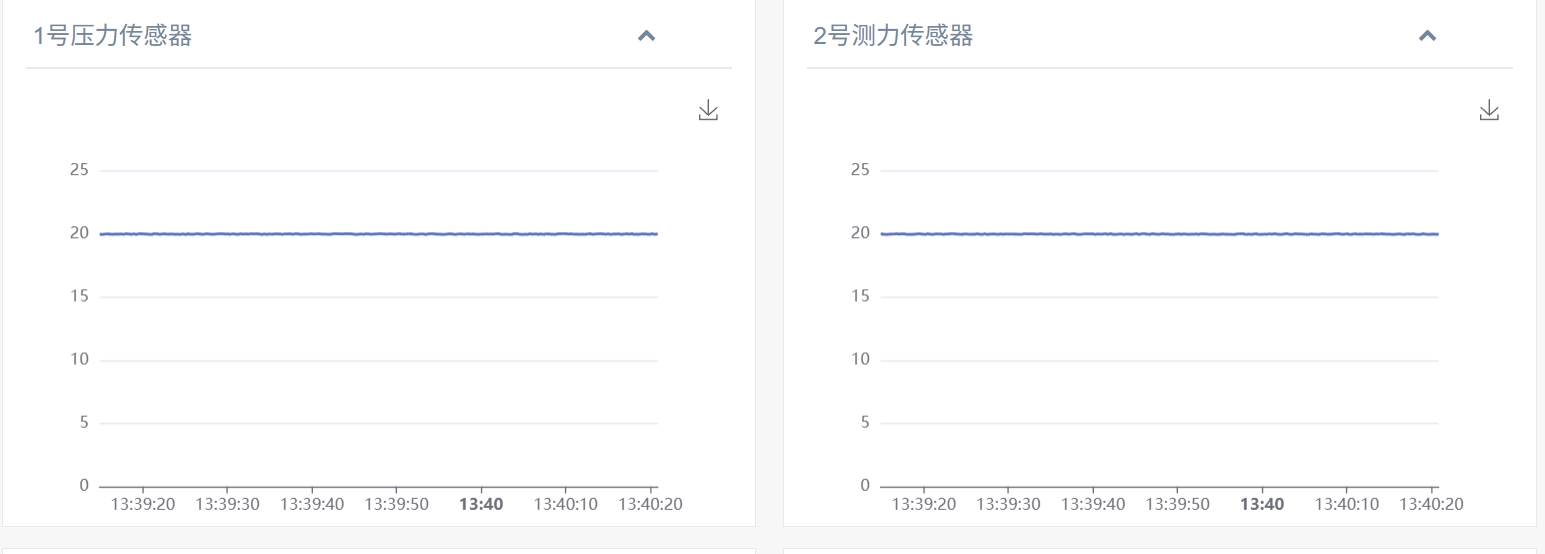
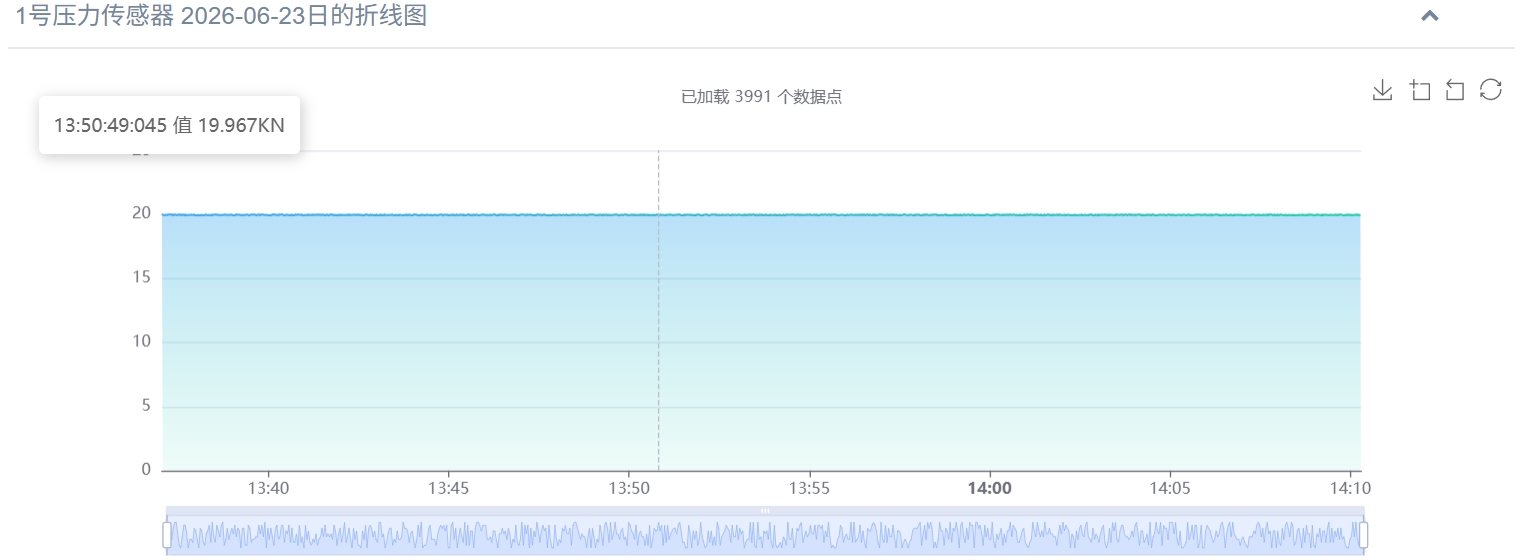
The companion PC software displays real-time curves across all 8 channels, supports
overlaid multi-channel comparison, and allows historical data playback. Data exports
directly to Excel or CSV.
3. Companion PC Software
The included software is designed for use without programming: real-time curves, historical playback, and multi-channel overlay comparison support data analysis and reporting directly out of the box.
4. Key Advantages
8 Independent Channels
Each channel has a dedicated signal-processing path with independently configurable parameters and hardware isolation, supporting reliable multi-point synchronized measurement.
Fast Response, High Precision
A dedicated ADC design paired with an optimized filtering algorithm delivers 2 ms response time alongside 0.05% F.S. accuracy, suited to impact and vibration testing.
USB, Bluetooth, and Ethernet
All three interfaces are built into a single unit — wired connectivity for lab use, wireless for field deployment.
Portable, Industrial-Rated Housing
A compact, rugged enclosure suited to both fixed test-bench installation and field use in demanding environments.
5. Development and Validation
Stage 1: Core Design and Prototyping
Development focused on two core engineering challenges: multi-channel synchronization with anti-interference performance, and high-precision amplification of low-level signals. Ten engineering prototypes were built and tested through high/low-temperature cycling, long-term stability testing, and accuracy calibration.
Stage 2: Field Validation
The system was field-tested with industry partners across two applications. In lithium battery material stress analysis, it recorded multi-point stress data across full charge/discharge cycles without data loss. In industrial impact inspection, it captured microsecond-scale transient overload signals under production conditions.
Stage 3: Production and Launch
Manufacturing was standardized around automated SMT assembly with two-stage precision calibration to ensure consistency across production units. The FD8121W completed independent third-party performance certification prior to market launch.
6. Applications
The FD8121W is used across research, industrial inspection, and manufacturing quality control, including:
7. How the FD8121W Compares
| Criteria | FD8121W | Entry-Level Systems | Premium Systems |
|---|---|---|---|
| Channel count | 8 channels, independent and synchronized | 1–4 channels | 8 channels |
| Response time | 2 ms | 20–100 ms | 1–5 ms |
| Measurement accuracy | 0.05% F.S. | 0.5% F.S. | 0.05% F.S. |
| Sensor compatibility | Broad, no adapters required | Limited | Broad |
| Data visualization software | Included, dedicated application | Basic display only | Included |
| Typical pricing | Competitive for the performance tier | Lower cost, reduced performance | Significant premium |
| Support response time | Within 48 hours | Varies | 1–4 weeks |
Comparison figures reflect typical published specifications for each category as of publication and are provided for general guidance; consult individual manufacturer datasheets for exact figures.
8. System Architecture
Load cell, tension/compression, S-type
Built-in anti-aliasing filter
8-channel acquisition unit
High-speed transfer
Real-time visualization
Excel / CSV export
9. Summary
Performance suited to demanding multi-point force testing, at a competitive total cost.
The FD8121W has completed independent third-party laboratory certification and has been field-validated in lithium battery manufacturing, aerospace, and academic research applications.
For manufacturers: Lower acquisition and maintenance costs, backed by responsive technical support and reduced dependence on long international supply chains.
For research institutions: Lab-grade accuracy in a portable instrument, suitable for both bench testing and field data collection.
Frequently Asked Questions
Which force sensors does the FD8121W support?
The FD8121W supports load cells, tension/compression force sensors, S-type sensors, column-type force sensors, and miniature force sensors, without requiring additional adapter modules.
Is the 8-channel acquisition truly simultaneous, or sequentially scanned?
All 8 channels are hardware-triggered and acquire simultaneously, with inter-channel timing error under 1 μs. This ensures time-aligned multi-point data, which sequential scanning cannot guarantee.
What test scenarios benefit from the 2 ms response time?
The 2 ms response time is suited to capturing impact, vibration, and transient stress signals — for example in lithium battery expansion force testing, material fatigue testing, stamping tests, and dynamic mechanical analysis.
Can the FD8121W be used for lithium battery stress and expansion force testing?
Yes. The system supports synchronized multi-point acquisition and can record electrode expansion force and stress changes throughout a battery's charge/discharge cycle for material R&D, performance validation, and lifespan analysis.
Does the system support dynamic and impact testing?
Yes. The high-speed acquisition architecture, combined with built-in anti-aliasing filtering, is designed for impact testing, vibration testing, fatigue testing, and dynamic load analysis.
Does the companion software require programming knowledge?
No. The PC software supports real-time curve display, multi-channel overlay analysis, historical data playback, and parameter configuration, and is ready to use after installation.
Can acquired data be exported to MATLAB, Origin, or Python?
Yes. Data exports in Excel and CSV format for direct import into MATLAB, Origin, Python, and other analysis tools; API access and custom data interfaces are also available.
Can channel count be expanded for larger multi-point tests?
Yes. Multiple units can be deployed together to scale channel count as project requirements grow.
How do I choose the right acquisition configuration for my application?
Share your test object, required channel count, sensor type, measurement range, and accuracy requirements, and our engineering team can recommend a complete sensor and acquisition system configuration.
Compatible Sensors
Load Cells
Compatible with the FD8121W without additional adapters
Tension/Compression Sensors
Available from miniature to high-capacity ranges
Miniature Force Sensors
Suited to space-constrained precision testing
Complete Acquisition System
Acquisition unit, sensors, and software as a complete package